
ANTERIOR CLINOID MENINGIOMA
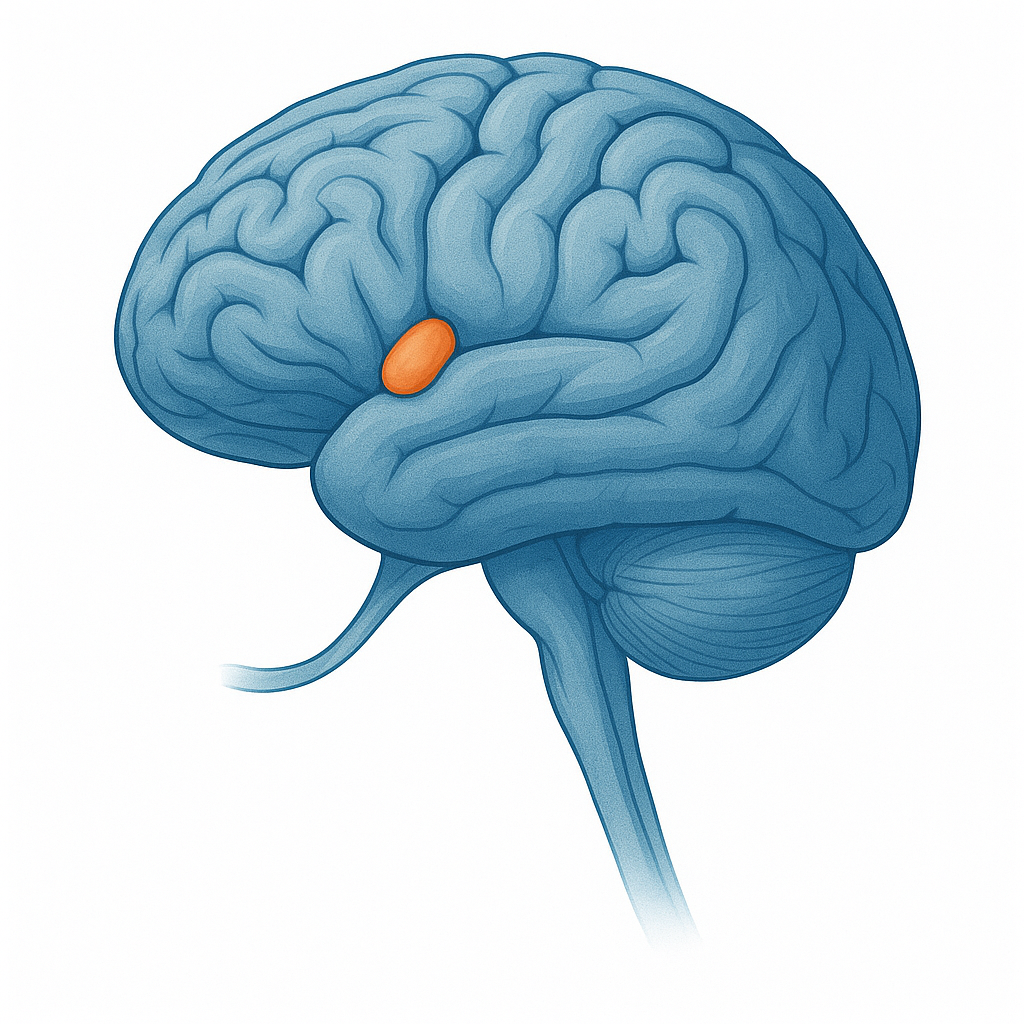
Anterior Clinoid Meningioma Definition/Overview
Anterior Clinoid Meningioma is a tumor that arises from the meninges covering a small bone located next to the optic nerve in the skull base. The tumor grows deep under the brain between the frontal lobe and the temporal lobe. It can cause pressure and displacement of the optic nerve. It often encases the internal carotid artery and its main branches (the middle cerebral artery and the anterior cerebral artery). In some cases, the tumor can grow to a formidable size before diagnosis.
Patient Presentation
Patients can present with unilateral vision loss and headache. With progression of the tumor, it compresses the frontal and temporal lobes of the brain and can cause disabling seizures and cognitive dysfunction. Speech difficulties can occur when the tumor is on the dominant side of the brain.
Meningioma Management
Management of anterior clinoid meningioma requires surgery when the patient is symptomatic with vision loss, cognitive dysfunction or seizures. Elderly patients with small tumors and minimal symptoms can be treated conservatively with surveillance MRIs. Radiation is generally not recommended in these tumors as a primary treatment because of the proximity to the optic nerve.
Meningioma Surgical Difficulties:
-
Deep location under the brain
-
Close relation to important major brain arteries
-
Close relation to the optic nerve
-
Size of the tumor
Surgical Management at the Meningioma Center
Surgery for an anterior clinoid meningioma is a complex procedure due to the tumor’s proximity to critical neurovascular structures like the optic nerve, internal carotid artery (ICA), and cavernous sinus. The primary goal is to remove the tumor while preserving neurological function, particularly vision, as these tumors often cause visual impairment due to optic nerve compression. The surgical approach depends on the tumor’s size, location, and involvement with surrounding structures.
At the MENINGIOMA CENTER, we conceptualized the focal orbital approach, which can be used for the removal of anterior clinoid meningiomas. This approach, associated with microsurgical technique and the extradural navigation concept, allows access to this deep tumor without hazardous exposure and only minimal direct manipulation or retraction of the brain. In selected cases, the focal orbital approach can be done through a small eyebrow incision. The approach allows for early identification and full decompression of the optic nerves, which maximizes the chances of visual recovery. Early identification of the carotid artery decreases the chance of unwanted arterial lesions with possible devastating consequences. Moreover, this minimal surgical approach enhances the potential for complete resection of the tumor, including its meningeal root at the anterior clinoid.
Anterior Clinoid Meningioma Prognosis
Full or partial recovery of visual difficulties, cognitive dysfunction, and speech difficulties is possible with adequate surgical management of anterior clinoid meningioma using the focal orbital approach conceptualized at the Center for Meningioma Surgery. The patients have the potential for returning to their pre-morbid lifestyle and job occupation. Maximal removal of the tumor and its meningeal root maximizes the chances of cure without tumor recurrence.